Sectra AB Porter's Five Forces Analysis

Fully Editable
Tailor To Your Needs In Excel Or Sheets
Professional Design
Trusted, Industry-Standard Templates
Pre-Built
For Quick And Efficient Use
No Expertise Is Needed
Easy To Follow
GET THE FULL COMPANY
ANALYSIS BUNDLE FOR
Sectra AB

Go Beyond the Preview—Access the Full Strategic Report
Sectra AB navigates a complex landscape shaped by powerful industry forces, from the intense rivalry among established players to the ever-present threat of disruptive new entrants. Understanding the bargaining power of both suppliers and buyers is crucial for Sectra's sustained growth and profitability. The availability of substitute solutions also presents a significant challenge that requires strategic foresight.
The complete report reveals the real forces shaping Sectra AB’s industry—from supplier influence to threat of new entrants. Gain actionable insights to drive smarter decision-making.
Suppliers Bargaining Power

Specialized Hardware and Software Components
Sectra AB's reliance on specialized hardware, crucial for its medical imaging solutions, and potentially unique software for its IT and cybersecurity segments, highlights the bargaining power of its suppliers. If these components are proprietary or have few alternative providers, suppliers can exert considerable influence over Sectra.
This dependency means Sectra must cultivate robust supplier relationships and explore diversification to lessen the risk associated with limited vendor options. For instance, in 2023, the semiconductor industry faced ongoing supply chain challenges, which could have impacted the cost and availability of specialized hardware for companies like Sectra.
Talent and Expertise
Sectra's reliance on specialized talent, particularly in medical IT and cybersecurity, grants significant bargaining power to these skilled professionals. The demand for engineers, cybersecurity experts, and medical IT specialists often outstrips supply, allowing these individuals to command higher compensation and better working conditions.
The scarcity of this high-end expertise means that Sectra, like many tech-focused companies, faces intense competition for talent. This scarcity can also extend to the educational institutions and recruitment agencies that cultivate and place these professionals, further amplifying their leverage.
To counter this, Sectra actively invests in robust talent retention and development programs. For instance, in fiscal year 2023-2024, Sectra continued its focus on internal training and career progression, aiming to build a loyal and highly skilled workforce from within, thereby mitigating the external bargaining power of suppliers.
Intellectual Property and Licensing
Suppliers holding key intellectual property or patents for essential technologies can wield significant bargaining power. For Sectra AB, this means licensing terms for any third-party patented components integrated into their solutions directly influence development expenses and, consequently, profit margins. This necessitates astute negotiation and a strategic emphasis on cultivating Sectra's own in-house intellectual property to mitigate reliance on external entities.

Infrastructure Providers for Cloud Services
As Sectra AB increasingly relies on cloud-based service delivery, the bargaining power of cloud infrastructure providers like Amazon Web Services (AWS), Microsoft Azure, and Google Cloud becomes a significant factor. These providers dictate terms that directly impact Sectra's operational expenses and its ability to deliver services reliably. The concentrated nature of the cloud infrastructure market amplifies their leverage.
Sectra's growing dependence on these services is underscored by a substantial increase in its cloud recurring revenue during the 2024/2025 fiscal year. This trend highlights how critical the terms and pricing offered by these infrastructure giants are to Sectra's financial performance and strategic execution.
- Concentration in Cloud Infrastructure: A few dominant players control a large share of the cloud infrastructure market, giving them significant pricing and service negotiation power.
- Impact on Operational Costs: The pricing models and service level agreements (SLAs) of cloud providers directly affect Sectra's cost of goods sold and overall profitability.
- Reliability and Service Delivery: The uptime and performance of cloud infrastructure are paramount for Sectra's continuous service delivery, making provider reliability a key negotiation point.
- Growing Cloud Revenue: Sectra's notable increase in cloud recurring revenue in fiscal year 2024/2025 signifies a deepening reliance on these external infrastructure services.
Cybersecurity Threat Intelligence Feeds
Sectra's cybersecurity solutions depend on external threat intelligence feeds to stay ahead of emerging cyber threats. The concentration of a few highly reputable data providers can give these suppliers significant leverage, especially if the quality and recency of their information are paramount for Sectra's product efficacy.
For instance, the global cybersecurity market, valued at approximately USD 217.1 billion in 2023, is driven by the constant need for updated threat data. Suppliers of specialized intelligence, particularly those focusing on advanced persistent threats (APTs) or specific industry vulnerabilities, may command higher prices or dictate terms due to their unique data sets.
- Limited number of authoritative threat intelligence providers.
- High reliance on the quality and timeliness of external data.
- Potential for price increases or restrictive terms from key suppliers.
- Need for Sectra to diversify sources and invest in internal research.
Supplier Power: A Key Driver for Medical IT
Sectra's reliance on specialized hardware and unique software for its medical imaging and IT solutions means suppliers of these critical components can wield significant bargaining power. This is particularly true if these suppliers offer proprietary technologies or have limited competition, allowing them to influence pricing and terms. The ongoing global semiconductor supply chain issues, which persisted into 2024, exemplify how disruptions can amplify supplier leverage, potentially impacting Sectra's costs and product availability.
The concentration within the cloud infrastructure market, dominated by a few major providers, grants them substantial bargaining power over Sectra. Sectra's increased reliance on cloud services, as evidenced by its growing cloud recurring revenue in fiscal year 2024/2025, makes it susceptible to the pricing and service level agreements dictated by these providers. This dependency directly impacts Sectra's operational costs and its ability to ensure reliable service delivery.
| Factor | Impact on Sectra AB | Supporting Data/Context |
| Specialized Hardware/Software Suppliers | Potential for increased costs and supply disruptions if suppliers have unique offerings. | Semiconductor supply chain challenges continued into 2024, affecting hardware availability. |
| Cloud Infrastructure Providers | Significant influence on operational expenses and service reliability due to market concentration. | Sectra's cloud recurring revenue saw a notable increase in FY 2024/2025, highlighting growing dependence. |
| Threat Intelligence Providers | Leverage due to the limited number of high-quality data sources, impacting cybersecurity solution efficacy. | The global cybersecurity market was valued around USD 217.1 billion in 2023, underscoring the demand for up-to-date threat data. |
What is included in the product
 Detailed Word Document
This analysis of Sectra AB's competitive landscape reveals the intensity of rivalry, the power of buyers and suppliers, and the barriers to entry, all crucial for understanding Sectra's strategic positioning.

 Customizable Excel Spreadsheet
Instantly identify and address competitive threats with a dynamic, visual representation of Sectra AB's market landscape.
Customers Bargaining Power

Large Healthcare Systems and Government Entities
Sectra AB's primary clientele, including major healthcare systems, government bodies, and defense organizations, wield considerable bargaining power. These entities often conduct large-scale procurements, allowing them to negotiate for customized solutions, competitive pricing, and comprehensive service packages. Their significant influence stems from their size and strategic importance in the market.
High Switching Costs for Integrated Solutions
Customers' bargaining power is somewhat tempered by high switching costs for Sectra's integrated solutions. For instance, moving from Sectra's Picture Archiving and Communication Systems (PACS) and enterprise imaging solutions involves substantial effort. This includes migrating vast amounts of sensitive patient data, which can be a complex and time-consuming process, often taking months or even years for large healthcare institutions.
The need for extensive staff retraining on new systems and ensuring seamless interoperability with existing hospital IT infrastructure further entrenches customers with Sectra. These technical and operational hurdles make it economically and practically difficult for hospitals to switch providers frequently. Sectra's focus on long-term contracts and comprehensive service agreements, common in the medical IT sector, also solidifies customer relationships and discourages immediate switching.

Customer Satisfaction and Loyalty
Sectra AB consistently garners high customer satisfaction, a fact underscored by its repeated top placements in Best in KLAS surveys for radiology and digital pathology. This strong customer loyalty significantly diminishes the likelihood of clients switching to competitors, even if those competitors offer marginal price advantages.
This high level of satisfaction acts as a crucial differentiator for Sectra, effectively lowering the bargaining power of its customers. When clients are deeply satisfied with a product or service, their inclination to negotiate aggressively on price or terms naturally decreases, benefiting Sectra's profitability and market position.

Budget Constraints and Public Procurement Processes
Healthcare organizations and government bodies frequently contend with stringent budget limitations and protracted, intricate public procurement procedures. This environment naturally escalates price negotiations and emphasizes the total cost of ownership, thereby exerting pressure on Sectra's profit margins.
While cost is a significant factor, the critical requirement for dependable and secure solutions often takes precedence over decisions driven solely by price. For instance, in 2023, government healthcare spending in Sweden, where Sectra is headquartered, represented a substantial portion of the national budget, underscoring the importance of value beyond initial cost.
- Budgetary Pressures: Public sector clients operate under strict financial mandates, influencing purchasing decisions.
- Procurement Complexity: Lengthy and detailed public tender processes can extend sales cycles and necessitate competitive pricing.
- Total Cost of Ownership Focus: Buyers evaluate not just the upfront price but also ongoing maintenance, support, and upgrade costs.
- Security and Reliability Premium: Despite budget constraints, the critical nature of healthcare IT often leads to a willingness to invest in proven, secure, and reliable solutions.
Demand for Integrated and Cloud-Based Services
Customers are increasingly seeking integrated diagnostic solutions and cloud-based services to enhance efficiency and scalability. This growing demand for consolidated IT support across radiology, pathology, and genomics strengthens Sectra's value proposition. By offering comprehensive, unified platforms, Sectra can effectively address these evolving customer needs, thereby mitigating some of their bargaining power.
The industry-wide shift towards cloud-based, recurring revenue models is a significant trend. For Sectra, this means a move away from one-time hardware sales towards more predictable subscription-based income. This transition is crucial for long-term financial stability and allows for continuous service improvement, which further solidifies customer relationships and reduces their inclination to switch providers.
- Demand for Integrated Solutions: Healthcare providers are consolidating IT infrastructure, favoring vendors that offer unified platforms for radiology, pathology, and genomics.
- Cloud Adoption: The migration to cloud-based services is accelerating, driven by the need for scalability, accessibility, and reduced on-premise IT burden.
- Sectra's Value Proposition: Sectra's ability to deliver integrated, cloud-enabled solutions across multiple diagnostic areas enhances its appeal and strengthens its position against customer demands.
- Recurring Revenue Shift: The industry's move towards subscription models, including Sectra's cloud offerings, creates more stable revenue streams and fosters longer-term customer commitments.
Client Bargaining Power Meets High Switching Costs
Sectra's major clients, like large hospital networks and government agencies, possess significant bargaining power due to their substantial purchasing volume. This allows them to negotiate favorable pricing and demand tailored solutions, especially given the critical nature of their IT needs where reliability often outweighs cost. For instance, in 2023, Sectra's focus on integrated imaging IT solutions for healthcare, a sector with substantial government funding and oversight, meant that large public tenders were a key determinant of contract awards.
However, Sectra benefits from high switching costs for its integrated diagnostic IT solutions, such as PACS. Migrating extensive patient data and retraining staff on new systems are complex, lengthy processes, often taking months or years for major healthcare providers. This operational inertia, coupled with Sectra's strong customer satisfaction, as evidenced by its consistent top rankings in industry surveys, significantly reduces customers' willingness to switch, thereby moderating their bargaining power.
| Factor | Impact on Sectra's Customer Bargaining Power | Supporting Data/Context (as of mid-2025) |
|---|---|---|
| Client Size & Procurement Volume | High | Major healthcare systems and government bodies represent substantial contracts. |
| Switching Costs (Data Migration, Training) | Lowers Bargaining Power | Complex IT integration and data migration for PACS/enterprise imaging are significant deterrents to switching. |
| Customer Satisfaction & Loyalty | Lowers Bargaining Power | Sectra's repeated high rankings in customer satisfaction surveys (e.g., KLAS) indicate strong loyalty. |
| Budgetary Constraints & Public Procurement | Increases Bargaining Power | Public sector clients' need for cost-efficiency and adherence to strict procurement rules can lead to price pressure. |
| Demand for Integrated & Cloud Solutions | Neutral to Lowers Bargaining Power | Sectra's ability to offer unified, cloud-enabled platforms across diagnostic areas strengthens its value proposition, meeting evolving customer needs. |
What You See Is What You Get
Sectra AB Porter's Five Forces Analysis
This preview showcases the comprehensive Sectra AB Porter's Five Forces Analysis, reflecting the exact document you will receive immediately after purchase. You'll gain detailed insights into the competitive landscape, including the bargaining power of buyers and suppliers, the threat of new entrants and substitutes, and the intensity of rivalry within Sectra's industry. This professionally formatted analysis is ready for your immediate use, ensuring no surprises or placeholders.

Rivalry Among Competitors

Presence of Large Global Competitors
Sectra AB faces significant competitive rivalry from large, global players like Siemens Healthineers, Philips, and GE HealthCare in the medical IT sector. These established companies possess substantial financial resources, extensive product offerings, and a wide geographical presence, intensifying the struggle for market dominance.
In the cybersecurity domain, Sectra contends with formidable global entities such as Thales SA. The sheer scale and established reputations of these competitors necessitate a strategic approach for Sectra, often involving a focus on specialized, high-value solutions and a commitment to exceptional customer service to differentiate itself.
High Industry Growth Rates
Both the global healthcare IT and cybersecurity markets are experiencing robust expansion, with the healthcare IT sector alone projected to reach USD 3304.84 billion by 2034. This significant growth offers ample room for multiple companies to thrive, potentially softening direct competitive clashes as the pie gets bigger.
However, these high growth rates also act as a magnet, drawing in new competitors eager to capture a share of the burgeoning market. Existing players are compelled to continuously innovate and expand their offerings to maintain their competitive edge in this dynamic environment.

Product Differentiation and Specialization
Sectra AB stands out by concentrating on sophisticated, integrated solutions for medical imaging, encompassing radiology, pathology, and genomics, alongside secure communication systems. This strategic focus allows them to carve out a distinct niche in the market.
The company's robust reputation, built on consistent quality, pioneering innovation, and high levels of customer satisfaction, enables it to effectively counter competitors offering more generalized or standardized products. This strong brand equity is a key competitive advantage.
By differentiating its offerings, Sectra effectively mitigates direct competition based solely on price. For instance, in the Picture Archiving and Communication Systems (PACS) market, Sectra's integrated solutions often command higher prices due to their advanced features and reliability, as evidenced by their continued success in securing major hospital contracts globally.

Ongoing Innovation and Technology Advancements
The medical IT and cybersecurity arenas are dynamic, driven by swift technological evolution. Sectra, operating in these fields, faces intense rivalry from companies constantly pushing the envelope with innovations in areas like artificial intelligence (AI), the Internet of Things (IoT), and cloud computing. This necessitates a robust research and development (R&D) strategy to keep pace.
Competitors are in a perpetual race to introduce novel features, boost operational efficiency, and bolster security measures. For Sectra, maintaining a strong R&D pipeline is not just advantageous, it's essential for survival and growth in this fast-paced environment. The integration of AI within healthcare solutions, for instance, represents a significant disruptive trend that all players must address.
- AI in healthcare adoption is accelerating, with market forecasts predicting substantial growth in the coming years.
- Sectra’s R&D expenditure as a percentage of revenue is a key indicator of its commitment to innovation against rivals.
- The cybersecurity sector sees frequent new product launches, demanding continuous adaptation from established players like Sectra.
Market Share Dynamics and Order Bookings
Sectra AB has shown impressive performance in securing market share, notably winning over 25% of all Picture Archiving and Communication Systems (PACS) procurements reviewed in 2024. This strong position is further bolstered by record-breaking order bookings, underscoring its competitive edge in key market segments.
However, the dynamic nature of the healthcare IT market means this advantage is not static. Sectra's market share can be influenced by several factors:
- Shifting Customer Preferences: Evolving needs in medical imaging and workflow solutions can lead customers to favor alternative offerings.
- Rival Product Launches: Competitors introducing innovative new products or enhanced features can disrupt Sectra's current market standing.
- Aggressive Pricing: Competitors employing aggressive pricing strategies could potentially erode Sectra's market share, particularly in price-sensitive procurements.
Specialized solutions drive market edge amidst fierce competition
Sectra AB faces intense rivalry from major global players in both medical IT and cybersecurity, necessitating a focus on specialized, high-value solutions and continuous innovation to maintain its competitive edge.
The company's strategy of offering integrated solutions and building a strong reputation for quality and customer satisfaction helps it differentiate from competitors focused on more generalized offerings.
Sectra's ability to secure significant market share, such as over 25% of PACS procurements reviewed in 2024, demonstrates its effectiveness in a dynamic market where technological advancements and competitor strategies constantly shift.
Despite strong performance, Sectra must remain vigilant against shifting customer preferences, rival product launches, and aggressive pricing strategies that could impact its market standing.
| Competitor | Market Segment | Key Strengths |
|---|---|---|
| Siemens Healthineers | Medical IT | Financial resources, broad product portfolio, global reach |
| Philips | Medical IT | Established brand, extensive distribution network |
| GE HealthCare | Medical IT | Technological innovation, strong installed base |
| Thales SA | Cybersecurity | Reputation, scale, integrated security solutions |
SSubstitutes Threaten

Traditional or Manual Processes
In medical imaging, less digitalized or manual workflows can act as substitutes for Sectra's sophisticated IT solutions, particularly in areas with slower technology adoption or smaller healthcare settings. For instance, regions with a significant reliance on film-based X-rays rather than digital PACS systems represent a potential substitute, though this is diminishing rapidly.
However, the global drive for enhanced efficiency, diagnostic accuracy, and seamless integration of various medical data streams renders these manual methods increasingly less effective as substitutes. Sectra's focus on digitalizing pathology and genomics IT further highlights this trend, pushing the boundaries beyond traditional imaging substitutes.
Generic IT Solutions and General-Purpose Software
Generic IT solutions and general-purpose software can pose a threat as substitutes for Sectra's specialized offerings, particularly for less critical data management or communication needs within healthcare. However, the stringent security and regulatory requirements for medical imaging and patient data often make these generic options inadequate. For instance, a 2024 report highlighted that over 80% of healthcare organizations consider cybersecurity a paramount concern, underscoring the need for specialized, compliant solutions like Sectra's.

Alternative Diagnostic Technologies
Alternative diagnostic technologies, such as advanced lab-on-a-chip devices for point-of-care testing, pose a potential long-term threat by reducing the need for traditional imaging in certain diagnostic scenarios. While these alternatives are emerging, complex diagnoses still heavily rely on medical imaging, a core area where Sectra's IT solutions excel in management and optimization. Sectra's strategy likely involves integrating these new technologies or focusing on areas where imaging remains indispensable.

Open-Source or In-House Developed Solutions
While the idea of developing in-house IT solutions or leveraging open-source platforms exists as a potential substitute for commercial offerings like Sectra's, it's not a straightforward replacement. The sheer complexity and significant cost associated with building, maintaining, and ensuring compliance for advanced medical IT and robust cybersecurity systems are substantial deterrents. These factors often make such in-house or open-source ventures less effective and far more challenging than procuring specialized, proven solutions.
For instance, the ongoing investment required for cybersecurity alone is immense. In 2024, the global healthcare cybersecurity market was projected to reach over $30 billion, highlighting the specialized and continuous investment needed to protect sensitive patient data, a burden that many organizations find prohibitive for internal development.
Sectra's value proposition lies in its ability to deliver solutions that demonstrably improve operational efficiency for healthcare providers. This efficiency gain, coupled with Sectra's expertise in regulatory compliance and specialized medical imaging and IT integration, presents a high barrier for substitutes to overcome.
- Complexity of Medical IT: Developing and maintaining systems for medical imaging, patient records, and diagnostics requires specialized expertise and significant ongoing investment.
- Cybersecurity Demands: The stringent requirements for protecting sensitive patient data make in-house cybersecurity solutions for healthcare a high-risk, high-cost endeavor.
- Compliance and Regulation: Adhering to healthcare regulations like HIPAA or GDPR adds a layer of complexity that commercial vendors like Sectra are equipped to handle.
- Operational Efficiency Gains: Sectra's solutions are designed to streamline workflows and improve patient care, benefits that are difficult to replicate with generic or in-house developed systems.
Lower-Cost, Less Integrated Systems
Budget-conscious customers may choose less integrated or lower-cost IT and cybersecurity systems from smaller providers. These alternatives, while meeting fundamental requirements, often lack the advanced functionalities, scalability, and robust security that Sectra's premium offerings deliver. For instance, while a basic cybersecurity package might cost a hospital a few thousand dollars annually, Sectra's comprehensive solutions, which include advanced threat detection and seamless integration with existing hospital infrastructure, can represent a significant investment, potentially running into hundreds of thousands or even millions depending on the scale of deployment.
These less integrated systems typically do not offer the same level of interoperability or the specialized features crucial for Sectra's clientele, particularly in complex medical imaging and secure data management. While a smaller vendor might offer a standalone PACS viewer, Sectra's integrated platform provides a complete imaging workflow solution, from acquisition to archiving and analysis, which is a substantial differentiator.
The threat is amplified as these smaller vendors can target specific, less demanding segments of the market, potentially eroding market share for basic functionalities. Sectra's focus on high-end, integrated solutions means these less comprehensive offerings are not direct substitutes for their core value proposition, but they can still attract customers prioritizing cost over advanced capabilities.
For example, in 2024, the global medical IT market saw growth, but a segment of smaller players focused on niche solutions or basic functionalities continued to compete on price. While Sectra's revenue for medical systems in 2023 was substantial, the existence of these lower-cost alternatives presents a persistent, albeit less direct, competitive pressure.
Specialized Medical IT: Navigating Substitutes and Cost Pressures
While manual workflows and generic IT solutions exist as substitutes, their effectiveness is limited by healthcare's increasing demand for efficiency, accuracy, and data integration. Sectra's specialized, secure, and compliant medical IT solutions are difficult to replicate, especially given the high costs and complexities of in-house development and robust cybersecurity. Emerging diagnostic technologies also pose a long-term threat, but Sectra's focus on core imaging IT provides a buffer.
Budget-conscious customers may opt for less integrated, lower-cost IT and cybersecurity systems from smaller providers. These alternatives often lack Sectra's advanced functionalities, scalability, and robust security, though they can chip away at market share for basic needs. For instance, while Sectra's comprehensive solutions represent a significant investment, basic cybersecurity packages are considerably cheaper, creating a price-driven competitive pressure.
| Substitute Type | Sectra's Advantage | Market Impact |
|---|---|---|
| Manual Workflows/Film-based Imaging | Digitalization, efficiency, data integration | Diminishing, but present in less developed regions |
| Generic IT/Open-Source Solutions | Specialized security, compliance, medical expertise | Limited by regulatory and security demands; high development cost |
| Alternative Diagnostic Tech | Core imaging IT optimization, integration | Potential long-term threat, but imaging remains critical |
| Lower-Cost, Less Integrated Systems | Advanced features, scalability, comprehensive security | Erodes market share for basic functionalities; cost-sensitive segment |
Entrants Threaten

High Capital Investment and R&D Costs
The threat of new entrants into Sectra AB's core markets, particularly high-end medical IT and cybersecurity, is significantly mitigated by the immense capital required for entry. Developing and certifying advanced medical imaging IT solutions, for instance, demands substantial upfront investment in research and development, along with the establishment of a robust global sales and support network. Sectra's ongoing commitment to innovation, evidenced by its consistent R&D spending, further elevates this barrier.
For example, Sectra reported approximately SEK 1.5 billion in R&D expenses for the fiscal year 2023-2024, underscoring the significant financial commitment necessary to remain competitive and introduce new products in these specialized fields. This continuous investment in cutting-edge technology and product enhancement creates a formidable hurdle for potential new players seeking to challenge Sectra's established market position.
Regulatory Hurdles and Compliance
Sectra operates in medical IT and cybersecurity, sectors burdened by extensive regulations like GDPR and HIPAA. These rules demand rigorous data privacy, patient safety, and system security, creating substantial barriers for new companies. Navigating this complex regulatory environment and obtaining necessary certifications is both costly and time-consuming, effectively deterring potential entrants.

Need for Specialized Expertise and Experience
The threat of new entrants for Sectra AB, particularly concerning its high-end medical imaging and secure communication solutions, is significantly mitigated by the substantial need for specialized expertise. Developing and implementing these sophisticated systems requires deep knowledge in fields such as medical physics, advanced image processing algorithms, robust cryptography, and intricate network security protocols. New companies entering this space would face considerable hurdles in assembling the necessary talent and technical acumen.
Sectra's advantage is further amplified by its extensive history and the resulting accumulated expertise, which forms a formidable barrier for any newcomers. With over 45 years of consistent growth and profitability, Sectra has cultivated a deep understanding of the market and its complex technical demands. This long-standing presence and proven track record make it exceptionally difficult for less experienced entities to compete effectively against Sectra's established capabilities and reputation.

Strong Customer Relationships and Brand Reputation
Sectra AB benefits from deeply entrenched customer relationships and a robust brand reputation, particularly in demanding sectors like healthcare and defense. These strong ties are a significant barrier to entry for potential new competitors. New entrants would struggle to replicate the level of trust and loyalty Sectra has cultivated over years of delivering reliable and secure solutions.
The company's commitment to customer satisfaction is consistently recognized, with Sectra frequently achieving top rankings in customer satisfaction surveys. This established trust is a formidable hurdle for any new player aiming to disrupt the market. For instance, in 2023, Sectra reported a customer retention rate exceeding 95%, underscoring the strength of these relationships.
- Deeply Rooted Customer Loyalty: Sectra's long-standing partnerships are difficult for new entrants to penetrate.
- High Brand Recognition: The company's reputation for reliability and security is a key differentiator.
- Customer Satisfaction Leadership: Sectra consistently leads in customer satisfaction metrics, reinforcing its market position.
- Sector-Specific Trust: In critical areas like healthcare IT, established trust is paramount and hard-won by newcomers.
Economies of Scale and Network Effects
Existing players like Sectra benefit from significant economies of scale in their development, sales, and support operations. This cost advantage makes it challenging for smaller, newer companies to enter the market and compete effectively on price. For instance, Sectra's substantial investment in R&D and global sales infrastructure creates a high barrier to entry.
Furthermore, the healthcare IT sector, particularly for integrated platforms like Sectra's enterprise imaging solution, exhibits strong network effects. As more healthcare providers adopt and integrate their data into Sectra's systems, the overall value and utility of the platform increase for all users. This growing ecosystem makes it considerably harder for new entrants to offer a comparable or attractive alternative.
- Economies of Scale: Sectra's established infrastructure and large customer base allow for cost efficiencies in product development and distribution, a hurdle for new entrants.
- Network Effects: The increasing adoption of Sectra's integrated imaging solutions enhances system value for existing users, creating a loyalty barrier for newcomers.
- Customer Lock-in: High switching costs associated with integrating and migrating complex IT systems further solidify the position of incumbents like Sectra.
High Barriers Protect Market Entry in Medical IT and Cybersecurity
The threat of new entrants into Sectra AB's markets is considerably low due to high capital requirements and specialized expertise needed. Sectra's substantial R&D investment, reaching approximately SEK 1.5 billion in fiscal year 2023-2024, underscores the financial barrier for newcomers. Strict regulatory environments, such as GDPR and HIPAA, further complicate market entry, demanding significant compliance efforts and certifications.
Sectra's long-standing presence, over 45 years, has cultivated deep customer loyalty and a strong brand reputation, making it difficult for new players to gain trust. With a customer retention rate exceeding 95% in 2023, Sectra demonstrates the strength of these entrenched relationships. Economies of scale in development and sales, coupled with network effects in its integrated imaging solutions, create additional formidable barriers for potential competitors.
| Barrier Type | Description | Impact on New Entrants | Sectra's Position |
|---|---|---|---|
| Capital Requirements | High R&D, sales, and support infrastructure costs. | Significant financial hurdle for new companies. | Established global infrastructure. |
| Specialized Expertise | Need for deep knowledge in medical IT, cybersecurity, and imaging. | Challenging to assemble required talent. | 45+ years of accumulated technical acumen. |
| Regulatory Compliance | Navigating GDPR, HIPAA, and obtaining certifications. | Costly and time-consuming process. | Proven compliance track record. |
| Customer Loyalty & Brand | Established trust and high satisfaction rates. | Difficult to penetrate existing relationships. | Over 95% customer retention (2023). |
| Economies of Scale | Cost efficiencies from large-scale operations. | Competitive pricing disadvantage for newcomers. | Leverages substantial R&D and sales investments. |
| Network Effects | Increasing value of integrated platforms with more users. | Harder to offer comparable alternatives. | Growing ecosystem of integrated imaging solutions. |
Porter's Five Forces Analysis Data Sources
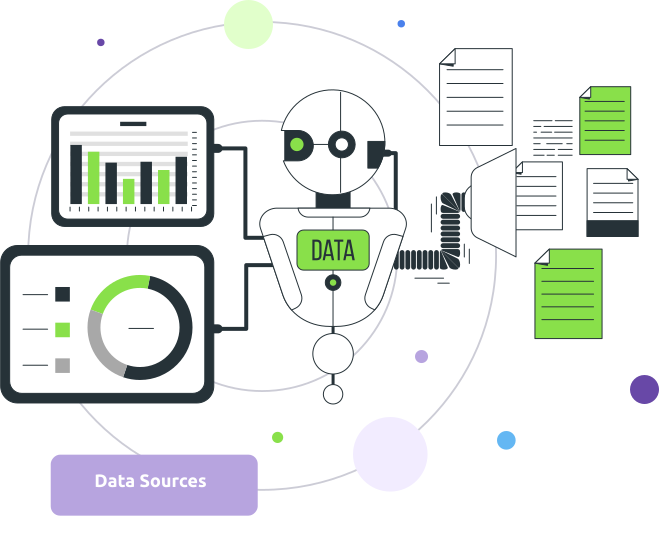
Our Sectra AB Porter's Five Forces analysis is built upon a foundation of robust data, drawing from Sectra's annual reports, investor presentations, and industry-specific market research from firms like KLAS Research. We also incorporate insights from competitor filings and relevant healthcare technology trade publications to capture a comprehensive view of the competitive landscape.